 English
 Español
 简体中文
简体中文 العربية
 Deutsch
 Français
 Italiano
 Tiếng Việt
Abandoned Mine Land Program
|
|
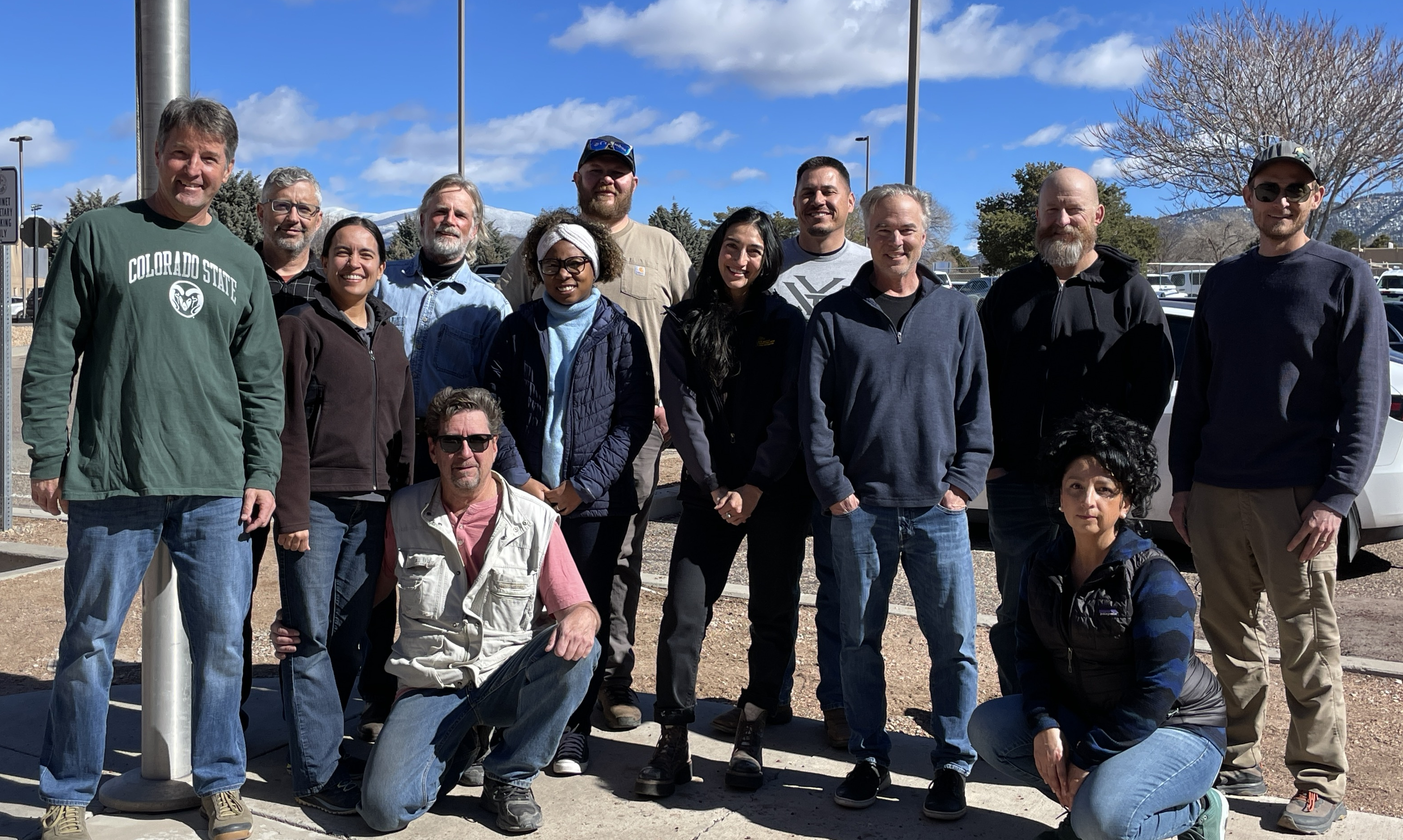 |
Since 1977, states and tribes have been working together to address public health and safety risks posed by abandoned mines across the country, but work remains. Visit National Association of Abandoned Mine Land Programs to learn about our national organization.
An estimated 15,000-plus abandoned legacy mine features exist in the State of New Mexico. They range from shallow prospect pits to 500-feet-deep mine shafts to piles of coal gob (mine waste).
The New Mexico Abandoned Mine Land (AML) Program and other abandoned mine land programs throughout the nation were formed by the passage of the Surface Mining Control and Reclamation Act (SMCRA) on May 2, 1977 (amended in 2006 and 2021). This federal law levies a fee on active coal mines. The amount of the fee varies, depending on whether the mine is surface-mined coal or underground-mined coal. The monies collected from this fee are placed in the Abandoned Mine Reclamation Fund, which then finances projects to reclaim coal mines abandoned prior to the enactment of SMCRA. Under certain conditions, abandoned non-coal mines may also be reclaimed using the Abandoned Mine Reclamation Fund monies.
For more information, see the AML FAQ page.
Contact Information
| Name | Phone Number | |
| SANTA FE OFFICE | ||
| Mike Tompson, P.E., Program Manager | (505) 690-8063 | mike.tompson@emnrd.nm.gov |
| Chuck Dentino, Project Manager | (505) 795-3339 | charles.dentino@emnrd.nm.gov |
| James Hollen, NEPA Coordinator | (505) 231-8332 | james.hollen@emnrd.nm.gov |
| Livia de Viterbo, Staff Engineer | (505) 469-6678 | livia.ramos@emnrd.nm.gov |
| Daniela Chacon, Staff Engineer | (505) 819-8180 | daniela.chacon@emnrd.nm.gov |
| John Daues, Project Manager | (505) 490-0825 | john.daues@emnrd.nm.gov |
| Beatrice Groven, Admin Coordinator | (505) 549-6782 | beatrice.groven@emnrd.nm.gov |
| ALBUQUERQUE OFFICE | ||
| Laurence D’Alessandro, Project Manager | (505) 469-0511 | laurence.dalessandro@emnrd.nm.gov |
| Meghan McDonald, P.E., Principal Engineer | (505) 629-9872 | meghan.mcdonald@emnrd.nm.gov |
| Lloyd Moiola, Environmental Manager | (505) 629-3757 | lloyd.moiola@emnrd.nm.gov |
| Leeland Murray, Project Manager | (505) 629-9677 | leeland.murray@emnrd.nm.gov |
| Andrew Zink, Cultural Resource Manager | (505) 490-7379 | andrew.zink@emnrd.nm.gov |
| Matthew Peralta, Project Manager | (505) 819-1955 | matthew.peralta@emnrd.nm.gov |